




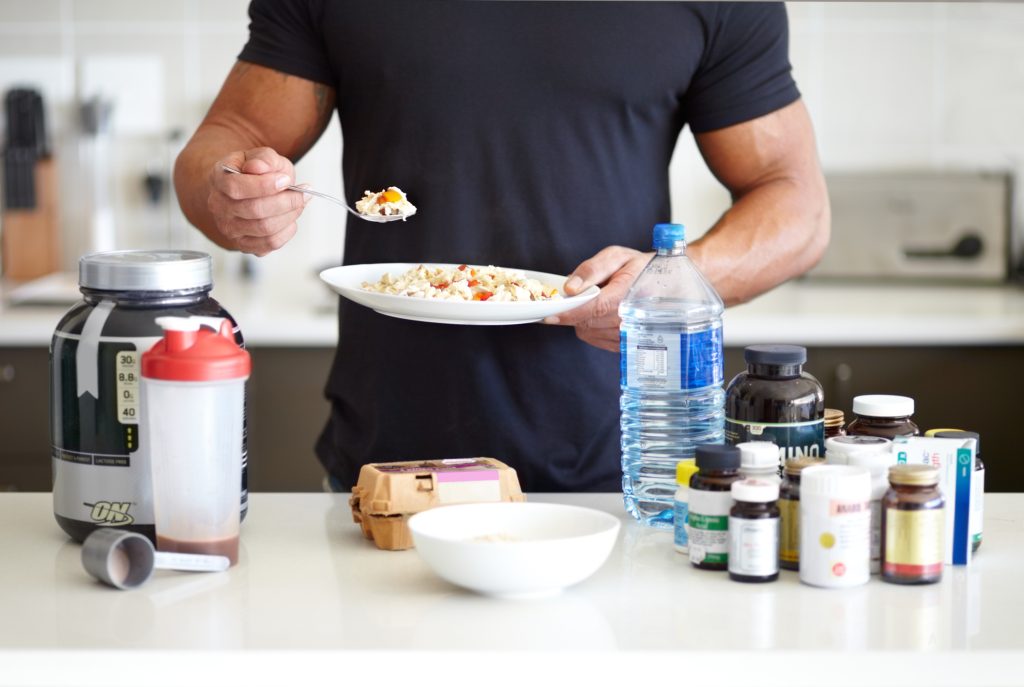
Quick answer: If you have been diagnosed with low testosterone and started testosterone replacement therapy (TRT), diet can support how you feel and your results, mainly by getting enough protein, key micronutrients (zinc, magnesium, vitamin D), and healthy fats, while limiting sugar and ultra-processed food. Diet supports TRT; it does not replace it, and any supplement should be cleared with your prescriber first.
TRT is prescribed and monitored by a physician for men with a diagnosed deficiency. Alongside it, a few nutrition habits are worth getting right.
Why diet matters on TRT
A balanced diet supports overall hormonal health. Deficiencies in zinc, magnesium, or vitamin D can affect the HPG axis and testosterone production. Excess body fat works against testosterone by increasing conversion to estrogen, so weight management matters too. Foods worth prioritizing include lean meats, fish and shellfish, dark leafy vegetables, avocados, eggs, berries, and pomegranates, while limiting refined carbohydrates, excess saturated fat, and sugary foods.
Key nutrients
Zinc
Zinc supports the male reproductive system and hormone synthesis, and enables the enzyme that converts testosterone to its active form [1]. The recommended intake for adult men is about 11 mg/day [2]. Good sources: oysters and crab, beef, fortified cereals, oats, eggs, and dairy.
Magnesium
Magnesium is directly associated with higher testosterone levels in older men [3]. Adult men need roughly 400 to 420 mg/day [4]. Good sources: leafy greens, legumes, nuts, pumpkin and chia seeds, whole grains, and bananas.
Vitamin D
Vitamin D supports bone health, immunity, and male reproductive function. Several studies link vitamin D deficiency with lower testosterone [5], and correcting a deficiency with supplementation has been shown to raise testosterone in men who are deficient [6]. Adult men generally need 600 to 800 IU/day [7]. Good sources: sunlight, fatty fish, fortified milk and cereals, eggs, and cod liver oil.
Protein for rebuilding muscle
Low testosterone can reduce muscle mass; on TRT, adequate protein supports rebuilding it. A common range for physically active adults is 1.4 to 2.0 g of protein per kilogram of body weight per day [8]. Good sources:
- Lean meats: chicken and turkey.
- Fish: salmon, tuna, mackerel (also omega-3s).
- Eggs: high-quality protein plus vitamin D and choline.
- Dairy: milk, yogurt, cheese (also calcium and vitamin D).
- Legumes: beans, lentils, peas (also fiber).
- Nuts and seeds: walnuts, almonds, pumpkin and chia seeds (protein plus healthy fats).
Supplements: what the research shows, and the caution
Some nutrients and herbs are studied in relation to testosterone, including zinc, vitamin D, l-arginine, mucuna (Mucuna pruriens), and ashwagandha (Withania somnifera). The evidence is mixed and often preliminary, and much of it comes from small studies. For context on what has been studied: randomized trials of l-arginine for erectile dysfunction have generally used doses in the range of roughly 3 to 6 grams per day [9], and mucuna has been studied at around 5 grams/day of seed powder over several weeks in a small group of infertile men under psychological stress, with reported effects on sperm parameters and testosterone in that specific population [10]. Fenugreek and ashwagandha are the most-studied herbs for testosterone, though a systematic review found the overall evidence mixed and effects modest where present [11]. These figures describe research, not a recommendation for you to self-dose.
Important: you are already on a prescribed therapy. Adding supplements can interact with medications and is not a proven way to improve prescribed TRT. Speak with the physician managing your TRT before adding any supplement, so it can be assessed for your specific situation.
Habits that work against TRT
Sugar-sweetened food and drinks: high sugar intake and excess calories drive fat gain, which increases conversion of testosterone to estrogen.
Ultra-processed food: often high in industrial trans fats, which are linked to lower testosterone and reduced reproductive hormone levels, and are best minimized [12]. Processed meats and processed dairy are common culprits.
Endocrine-disrupting chemicals: some chemicals found in certain plastics can behave like estrogens [13]. As a reasonable precaution, prefer glass, ceramic, or stainless steel for storing and heating food and drinks, especially anything acidic or fatty.
Frequently asked questions
Do I need supplements on TRT? Not necessarily. Focus first on protein, micronutrients, and limiting sugar and ultra-processed food. Discuss any supplement with your prescriber.
Will diet change my dose? Diet, weight, and overall health can affect how you feel and your results. Your prescriber manages dosing based on your monitoring.
When to speak with your provider
If you have questions about your TRT plan, dosing, or whether a supplement is appropriate for you, speak with the physician managing your treatment.
Disclaimer
This article is for general information only and, like all content on Gambit’s Health Hub, is not a substitute for professional medical advice, diagnosis, or treatment. Do not start or stop any supplement or medication without consulting the physician managing your care.
References
- Te L, Liu J, Ma J, Wang S. Correlation between serum zinc and testosterone: a systematic review. Journal of Trace Elements in Medicine and Biology. 2023;76:127124.
- NIH Office of Dietary Supplements. Zinc — Fact Sheet for Health Professionals.
- Maggio M, Ceda GP, Lauretani F, et al. Magnesium and anabolic hormones in older men. International Journal of Andrology. 2011;34(6 Pt 2):e594–e600. PMID: 21675994.
- NIH Office of Dietary Supplements. Magnesium — Fact Sheet for Health Professionals.
- Monson NR, Klair N, Patel U, et al. Association between vitamin D deficiency and testosterone levels in adult males: a systematic review. Cureus. 2023;15(9):e45856. doi:10.7759/cureus.45856.
- Lerchbaum E, Trummer C, Theiler-Schwetz V, Kollmann M, Wölfler M, Heijboer AC, Pilz S, Obermayer-Pietsch B. Effects of vitamin D supplementation on androgens in men with low testosterone levels: a randomized controlled trial. European Journal of Nutrition. 2019;58(8):3135–3146. PMID: 30460609.
- NIH Office of Dietary Supplements. Vitamin D — Fact Sheet for Health Professionals.
- International Society of Sports Nutrition. Position stand: protein and exercise. PMC5477153. (Recommended range applies to physically active adults.)
- Menafra D, de Angelis C, Garifalos F, et al. Long-term high-dose l-arginine supplementation in patients with vasculogenic erectile dysfunction: a multicentre, double-blind, randomized, placebo-controlled clinical trial. Journal of Endocrinological Investigation. 2022;45(5):941–961. PMID: 34973154.
- Mucuna pruriens seed powder study in infertile men under psychological stress: effects on sperm parameters and testosterone via the dopaminergic pathway. PMC2816389.
- Smith SJ, Lopresti AL, Teo SYM, Fairchild TJ. Examining the effects of herbs on testosterone concentrations in men: a systematic review. Advances in Nutrition. 2021;12(3):744–765. PMID: 33150931.
- Mínguez-Alarcón L, Chavarro JE, Mendiola J, et al. Fatty acid intake in relation to reproductive hormones and testicular volume among young healthy men. Asian Journal of Andrology. 2017;19(2):184–190. PMID: 27834316.
- Jeng HA. Exposure to endocrine disrupting chemicals and male reproductive health. Frontiers in Public Health. 2014;2:55. doi:10.3389/fpubh.2014.00055.